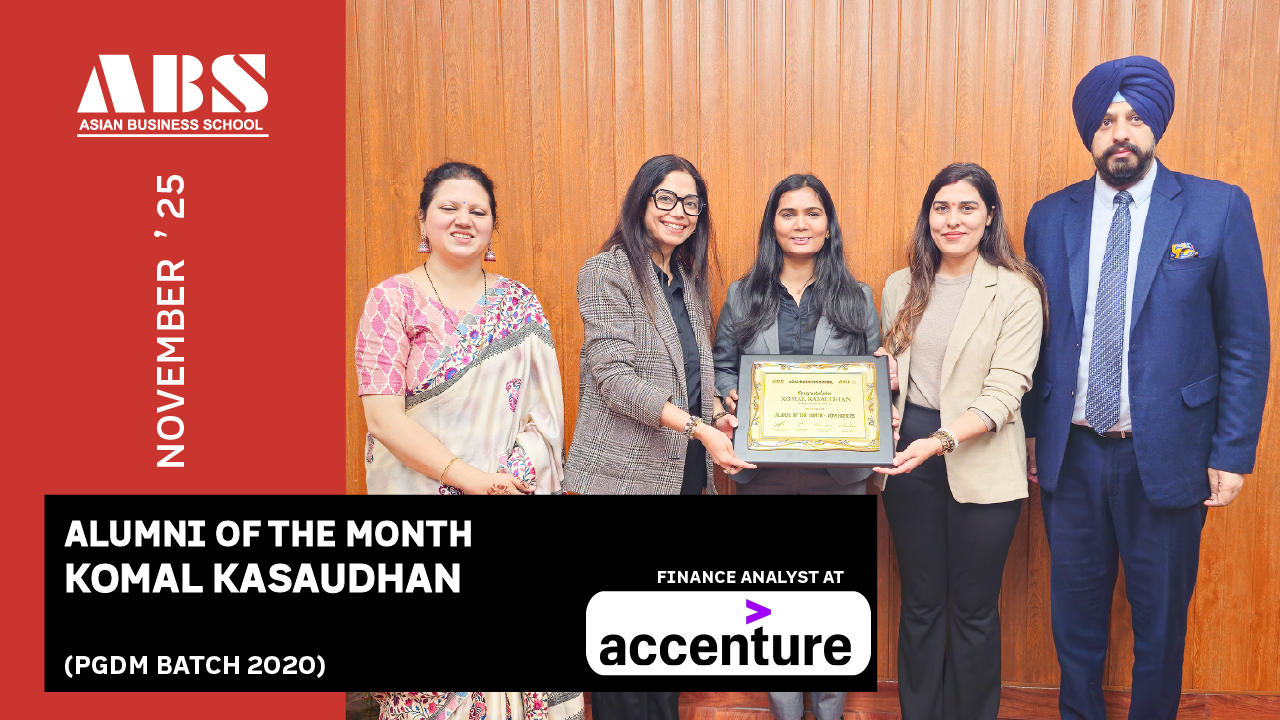
ABS ALUMNI OF THE MONTH
Question 1:
How does it feel to return back to your alma mater now as a proud Alumni of the month?
Answer:
Returning to my alma mater as the Alumni of the Month brings a wave of emotions and nostalgia. Walking back into the campus takes me straight to the days when I first entered as a student, reliving every experience, lesson, and memory I built here. This institution played a significant role in shaping my personal and professional journey. Being recognized today feels not only like an honor, but also a reminder of how far I have come and how strong the foundation laid here truly is.
Question 2:
If you could rewind time and relive the college moments that still bring a smile to your face, which ones would they be?
Answer:
When I think about reliving my college days, I am instantly taken back to the mix of nervousness and excitement I felt at the beginning of my journey—new learnings, new people, and a completely new phase of life. Over time, college and hostel life became powerful teachers, helping me learn how to adapt, manage relationships, handle challenges, and grow independent. From long conversations in the hostel to everyday moments in the cafeteria, each experience quietly shaped my confidence and resilience. I fondly remember the fresher’s days and the PDCC classes by Garima Ma’am, where we learned about grooming, communication, and professional conduct—lessons that continue to guide me even today. These moments not only bring a smile to my face but also remind me how instrumental the institution has been in preparing me for real-life situations.
Question 3:
From your perspective, what key aspects of corporate world should students be aware of early on, and how can they effectively prepare for them while still in college?
Answer:
From a finance professional’s perspective, students should early on understand the importance of financial discipline, data-driven decision-making, and ethical responsibility in the corporate world. Developing strong analytical skills, business acumen, and attention to detail is essential. While in college, students can prepare by gaining hands-on exposure through internships, live projects, and financial simulations. Continuous learning, staying updated with market trends, and building professional communication skills will help them transition smoothly into corporate roles.
Question 4:
Advanced Excel is required almost everywhere in corporate — what specific excel skills and other skills students must master before entering the industry?
Answer:
Beyond technical proficiency in Excel, students must focus on soft skills such as logical thinking, problem-solving, attention to detail, and structured thinking, which enable them to use data meaningfully. The ability to communicate insights clearly, collaborate with cross-functional teams, and remain adaptable to changing requirements is equally critical.
Question 5:
Stepping into your professional journey, could you share insights into your role as a Senior Executive at HCL and the core responsibilities you handled there?
Answer:
I secured my placement through the college, and the entire phase was filled with a mix of nervousness, excitement, and uncertainty about the future. However, the continuous support and guidance from faculty, peers, and the placement team gave me the confidence to stay focused. I remember putting in consistent effort and preparing rigorously for the process, which helped me overcome my self-doubt. My role primarily revolves around forecasting, budgeting, and P&L management, areas that demand strong analytical thinking, accuracy, and a disciplined approach. This journey taught me the value of perseverance, preparation, and trusting the process during critical career transitions.
Question 6:
Working in a large corporate environment like HCL often shapes a professional’s discipline and work ethic—how did this experience influence yours?
Answer:
Working in a large corporate environment like HCL played a significant role in shaping my professional discipline and work ethic. The exposure to structured processes, strict timelines, and high accountability taught me the importance of consistency, ownership, and attention to detail. Being part of a diverse, performance-driven organization also strengthened my ability to collaborate, adapt to change, and maintain professionalism under pressure.
Question 7:
What guidance would you share with students to help them tap into maximum opportunities by getting involved and taking initiative on campus?
Answer:
Students should actively participate in campus activities and view every opportunity as a chance to learn and grow beyond the classroom. Taking initiative—whether in clubs, events, projects, or leadership roles—helps build confidence, responsibility, and real-world skills. It is important to step out of one’s comfort zone, seek feedback, and stay consistent in efforts. Being proactive, curious, and open to learning allows students to make the most of campus life and prepare effectively for future professional opportunities.
RAPID FIRE QUESTIONS
- First job or first internship—what taught you more? First Job
- One management principle you actually use daily? Being Disciplined
- Your go-to conflict resolution style: negotiate, collaborate, or move on? Negotiate
- Mentor or manager—who influenced your career more? Mentor
- One college tradition you still miss? Hostel days
- One word to describe your Oxford trip experience? Amazing


