23 Jun 2026
AICTE
ApprovedNBA
AccreditedTop Placement
RecordsTrusted by
10k+ AlumniIndustry Expert
FacultyIn the present times, the biggest challenge of our education system is to leverage the learning of concepts and theories with the use of modern technology to create engaging, relevant, and personalized learning experiences for all students that symbolizes the reality of their future.
A good majority of B- schools and universities follow a teaching style that is a blend of theory and practical. The traditional methods of teaching within the four walls of the classroom that include lectures and textbooks do set the basic foundation for a student. Nevertheless, to attain the skills, which will be required at the workplace, these concepts have to be applied. This application of the learning will ensure that the student has been able to improve their critical thinking skills. The two years of PGDM / MBA should comprise this blend of theory and practice giving the student a comprehensive curriculum.
The academic activities like Business Plan Competition organized under the umbrella of Entrepreneurship Development & Incubation Centre (EDIC) as well as the multifarious activities conducted within the multiple Student Clubs like The Entrepreneurship Club: SEED, The Marketing Club: Mark-Techos, The Finance Club: Bulls N Bears, and The IT Club: Technocrats at Asian Business School (ABS), Noida give the students ample opportunities to collaborate and work with peers. For subjects like these, the implementation of ‘Simulation’ is the best solution as it deals with the real-life application of the knowledge gained in the classroom.
What are the benefits of Simulation?
Defined broadly, ‘Simulations’ are games that follow a system or a phenomenon. Here, the players are expected to achieve certain pre-specified goals and the environment of the simulation is pre-defined through algorithms and programming. The biggest benefit of simulations is that students get deeply involved in playing the simulation and they consider it as a game or a competition in the real sense. In the process of playing the simulation, the students start applying the concepts that they have learnt in their classes. This provides them with an interesting opportunity to find out how the concept actually works.
Furthermore, it is also the best way to implement Action Learning, i.e., learning by doing. Nowadays, simulations are available online so they can be accessed from anywhere. In fact, students can form teams and access the simulation from any part of the world. It also encourages more interactions among the students that set the platform for learning from each other. Besides, they can also afford to make mistakes and learn from it as the stakes are low and they have nothing to lose in terms of money or any other resource.
How to include Simulation in learning pedagogy?
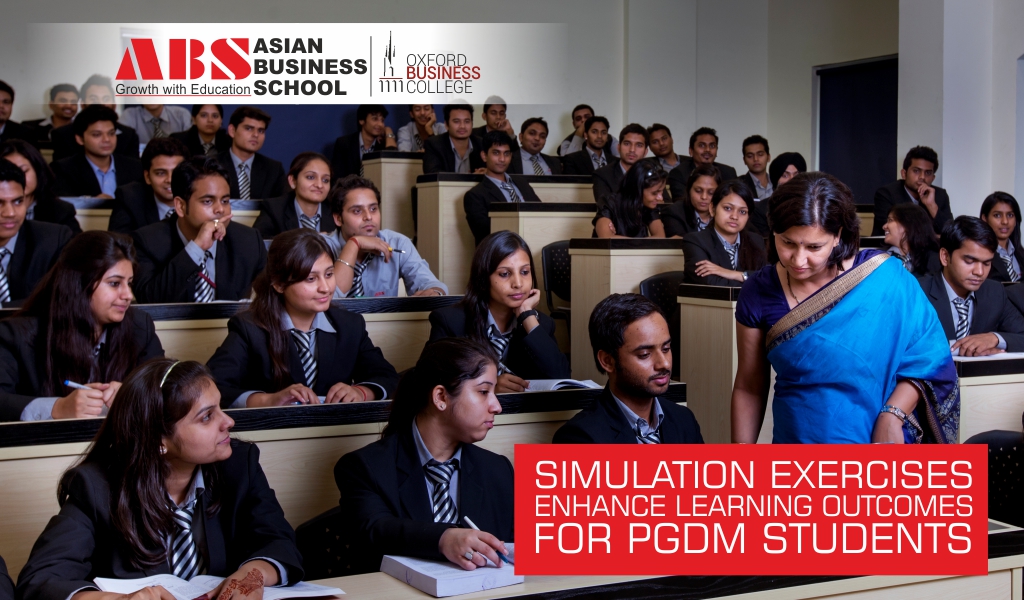
Because ‘Simulations’ are beneficial for management students, it is imperative that it is included in the learning pedagogy. ABS has been implementing simulations in its PGDM courses. Some of the key aspects that need to be considered for including Simulation in the learning pedagogy are:
There is no doubt that in the present dynamic environment, the main focus of higher educational institutions is to enable student-centered teaching. However, this will be possible only when learning happens in an active and collaborative environment. Thus, the inclusion of ‘Simulations’ in the teaching and learning of management concepts will not only make the students better learners but will also prepare them to face the challenges of the corporate world.

Explore more ABS blog articles from the current insights library.