ABS ALUMNI OF THE MONTH
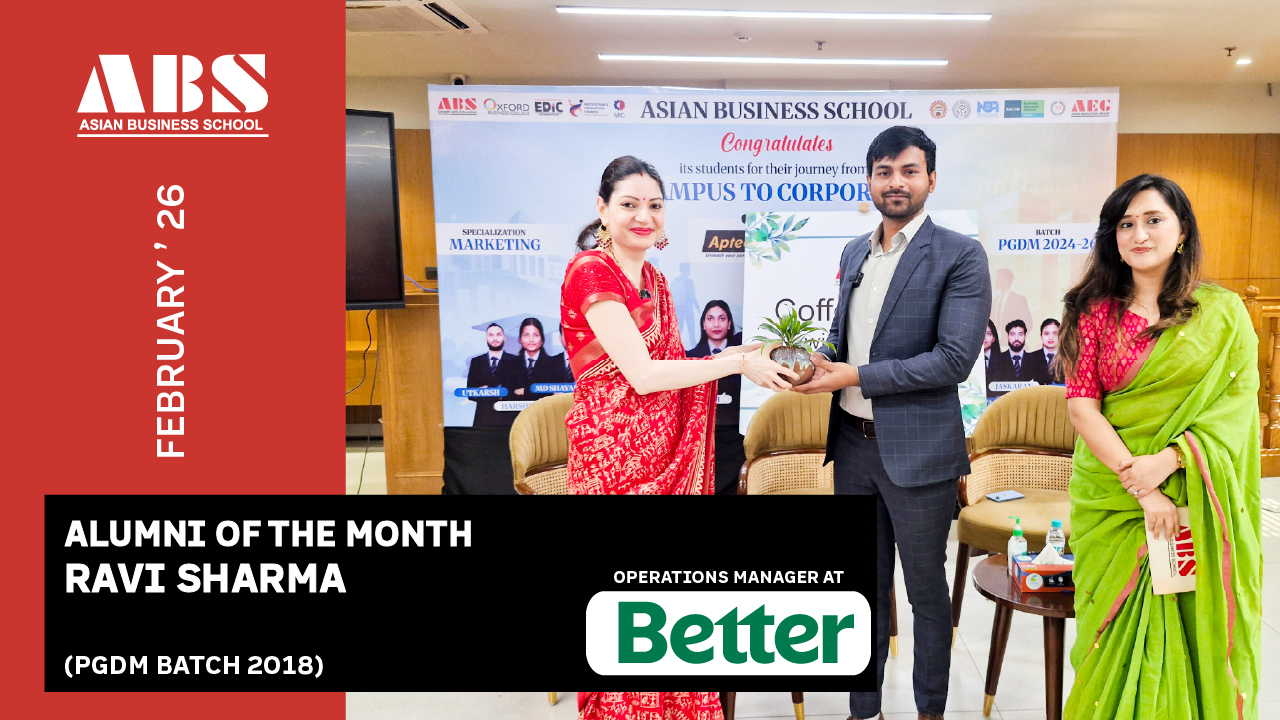
- What emotions came up when you were invited back to your alma mater as Alumni of the Month and how special this recognition feels to you?
It feels incredibly special to return to my alma mater—almost like coming full circle. Walking through the same corridors brings back a wave of memories, lessons, and moments that shaped who I am today. This recognition is not just an award, but a reminder that the journey I began here continues to hold value and impact. - When did you first realize you were ready to lead people, not just do your own work?
I realized I was ready to lead when I moved beyond just executing tasks to understanding the bigger picture. While working with numbers and profit & loss statements, I saw how important alignment across functions is for real impact. As I began streamlining processes and even used ChatGPT to automate parts of my work, my focus naturally shifted from doing tasks to improving systems—and that’s when my interest in leading and driving outcomes truly began. - What basic skill should students start building now to stay relevant in an AI-driven workplace?
Don’t outsource your creativity to AI tools like ChatGPT—that’s where your real value lies. Instead, focus on building original thinking and problem-solving abilities. Use AI as a support system, not a substitute. When you have your own data, ideas, and direction, these tools can enhance your efficiency and outcomes. Also, start understanding automation, as AI today is rapidly evolving beyond just answering questions to enabling smarter workflows and decision-making. - If one of your fresh starter suddenly drops output by 20%, what’s your first assumption—skill issue, motivation, process, or leadership failure? Why?
I wouldn’t jump to conclusions—it could be a mix of process gaps, clarity issues, or motivation rather than just a skill problem. My first step would be to understand the root cause through conversation, because often the issue lies in environment or guidance, not just the individual. - What skills do fresh management graduates usually overestimate, and which ones do they ignore but shouldn’t?
Many fresh graduates tend to overestimate perfectionism—focusing too much on making things look flawless rather than delivering meaningful results. In the real world, outcomes matter more than perfectly color-coded presentations. On the other hand, they often overlook essential skills like effective communication, which is a fundamental requirement in any role, and the right attitude. - What is one practical piece of advice you would give students before entering the Corporate world?
Never say a direct “no”—there’s always a way to communicate it thoughtfully. Especially when faced with unrealistic targets, organizations are often aware of the challenge; they’re really observing your attitude and how you respond. As a fresher, your ability to navigate such situations with clarity, tact, and problem-solving mindset speaks volumes about your professionalism. - Which LinkedIn Learning course would you recommend PGDM students complete during their program to strengthen their resume?
I would recommend pursuing a Six Sigma certification. It helps you understand how to become an effective manager by focusing on process improvement, eliminating waste, and enhancing productivity. More importantly, it teaches you a structured approach to problem-solving—something that adds strong value to your profile.
Rapid Fire
One habit that made the biggest difference in your career? – Wake up early
- Skills or attitude—what matters more in the long run? - Skills
- Specialization early or explore multiple roles first? – Multiple options
- Certifications or real project experience? – Real project
- AI as an assistant or a threat? - Threat
- Following a plan or adapting as you go? - Adapting
- Reading reports or watching dashboards? – Reading reports
- Stability or risk—what helped you grow more - Risk


